1. Scarcity and Intrinsic Value
Scarcity is a fundamental economic principle. By limiting the supply, uncontrolled inflation is prevented, preserving the token’s long-term value.
This is similar to gold or Bitcoin, where fixed supply creates upward pressure on price as demand increases.
2. Increased Investor Confidence
Investors and the community prefer projects with a defined supply, as it reduces the risk of excessive issuance.
A fixed token supply ensures transparency, strengthening trust in the cryptocurrency as a store of value.
3. Price Control and Adoption
Cryptocurrencies with unlimited supply risk price dilution over time.
A fixed supply maintains a stable balance between supply and demand, potentially reducing volatility and ensuring sustainable growth.
4. Protection Against Inflation and Devaluation
Cryptocurrencies without a limit can suffer uncontrolled inflation if developers increase supply arbitrarily.
A 1,000,000,000 token cap ensures that value grows solely based on market demand and adoption, rather than artificial expansion.
Conclusion
A limited total supply of 1,000,000,000 tokens helps preserve value, increase market confidence, and create more favorable conditions for stability and adoption. By preventing excessive issuance, the cryptocurrency remains scarce, sustainable, and attractive for long-term investors.

PUNKO – PNK
PNK the ERC20 TOKEN
CONTRACT ADDRESS: https://etherscan.io/token/0x6371678675ab280e8F154FeE6a5fd11459d3B312
LIQUIDITY LOCKER:
0x6a76da1eB2cBe8b0D52cFe122C4B7f0cA5a940eF
https://etherscan.io/address/0x6a76da1eB2cBe8b0D52cFe122C4B7f0cA5a940eF
WHITEPAPER:
-

-
The use of cryptocurrencies significantly enhances personal autonomy by providing greater control over finances, reducing reliance on intermediaries, and enabling unrestricted global transactions. Some key ways cryptocurrencies promote autonomy include:
1. Elimination of Financial Intermediaries
Cryptocurrencies function without the need for banks or centralized institutions, allowing individuals to manage their money independently. This is especially valuable in regions with limited access to banking services, where people can store and transfer value freely.
2. Access to Global Transactions Without Barriers
Thanks to blockchain’s decentralized nature, cryptocurrencies facilitate sending and receiving funds anywhere in the world without concerns about restrictive regulations or currency conversion fees. This benefits:
- Remote workers receiving international payments.
- People in countries with economic restrictions seeking financial stability through digital assets.
3. Protection Against Inflation and Devaluation
Traditional currencies can lose value due to uncontrolled inflation. Some cryptocurrencies, such as Bitcoin, have a fixed supply, reducing the risk of arbitrary devaluation by governments or central banks. This allows individuals to preserve their wealth with greater stability.
4. Privacy and Full Control Over Funds
Unlike traditional banking systems, where third parties can freeze accounts or censor transactions, cryptocurrencies offer greater privacy and autonomy. Users have exclusive control over their assets through their private keys, without external intervention risks.
5. Financial Inclusion and Economic Freedom
Millions of people around the world lack access to banking services. Cryptocurrencies allow anyone with an internet connection to participate in the global economy without relying on traditional institutions. This fosters greater financial independence and economic opportunities.

-
A liquidity pool is a fundamental mechanism in decentralized exchanges (DEXs) like Uniswap, allowing token swaps without direct buyers and sellers.
How does a liquidity pool work?
- Liquidity Provision: Users called liquidity providers (LPs) deposit token pairs into the pool (e.g., USDT/ETH).
- Automated Market Making (AMM): Instead of relying on a traditional order book, AMMs use a mathematical formula to determine asset prices based on available liquidity.
- Token Swaps: Traders can exchange tokens within the pool using the deposited liquidity. In return, they pay a trading fee, which is distributed among liquidity providers.
- Reward Mechanism: LPs receive liquidity pool tokens (LP tokens) representing their stake in the pool. These tokens can be redeemed to recover their share of funds along with accumulated fees.
Advantages of liquidity pools:
- Instant token trading without relying on order books.
- Decentralization eliminates intermediaries.
- Passive income generation for LPs through transaction fees.
Risks to consider:
- Impermanent loss: Potential losses if token prices fluctuate significantly.
- Smart contract vulnerabilities: Risk of exploits if contracts are not properly audited.

-
Uniswap is a decentralized exchange (DEX) operating on the Ethereum blockchain. It enables users to swap ERC-20 tokens directly from their wallets without relying on intermediaries like centralized exchanges (CEXs).
How Uniswap Works:
- Automated Market Maker (AMM) Model
- Instead of using a traditional order book, Uniswap employs a constant product formula:
[ x \times y = k ] Where x and y represent the amounts of two tokens in a liquidity pool, and k remains constant. This ensures that prices adjust based on supply and demand automatically.
- Instead of using a traditional order book, Uniswap employs a constant product formula:
- Liquidity Pools & Liquidity Providers (LPs)
- Users deposit token pairs into liquidity pools, like ETH/USDT, ensuring there’s always liquidity available for swaps.
- In return, LPs receive LP tokens, representing their stake in the pool, and earn a percentage of transaction fees.
- Swap Functionality
- When a trader swaps tokens, Uniswap uses the liquidity pool’s reserves to execute the trade at a dynamic price determined by the AMM formula.
- Slippage occurs if a large trade impacts the pool’s balance significantly, altering token prices.
- Fee Structure
- Every swap incurs a 0.3% fee, which is distributed to LPs as an incentive for providing liquidity.
- Protocol upgrades like Uniswap v3 introduced concentrated liquidity, allowing LPs to allocate capital more efficiently at specific price ranges.
Advantages of Uniswap:
✅ Fully decentralized: No sign-ups, KYC, or middlemen—anyone can participate.
✅ Permissionless trading: No need for centralized approval to list or exchange tokens.
✅ Liquidity incentives: Users can earn passive income by depositing assets into pools.
✅ Composability: Integrates seamlessly into DeFi applications, allowing lending, borrowing, and yield farming.Risks to Consider:
⚠️ Impermanent loss: LPs might lose value compared to holding tokens separately if prices shift significantly.
⚠️ Smart contract risks: Although audited, vulnerabilities may still exist.
⚠️ Slippage: Large trades can significantly impact token prices due to liquidity constraints.Uniswap’s Role in DeFi
Uniswap is one of the most widely used DeFi platforms, powering decentralized trading and enabling new financial products. Its trustless, open-source nature has inspired innovations in automated trading, liquidity mining, and permissionless finance.
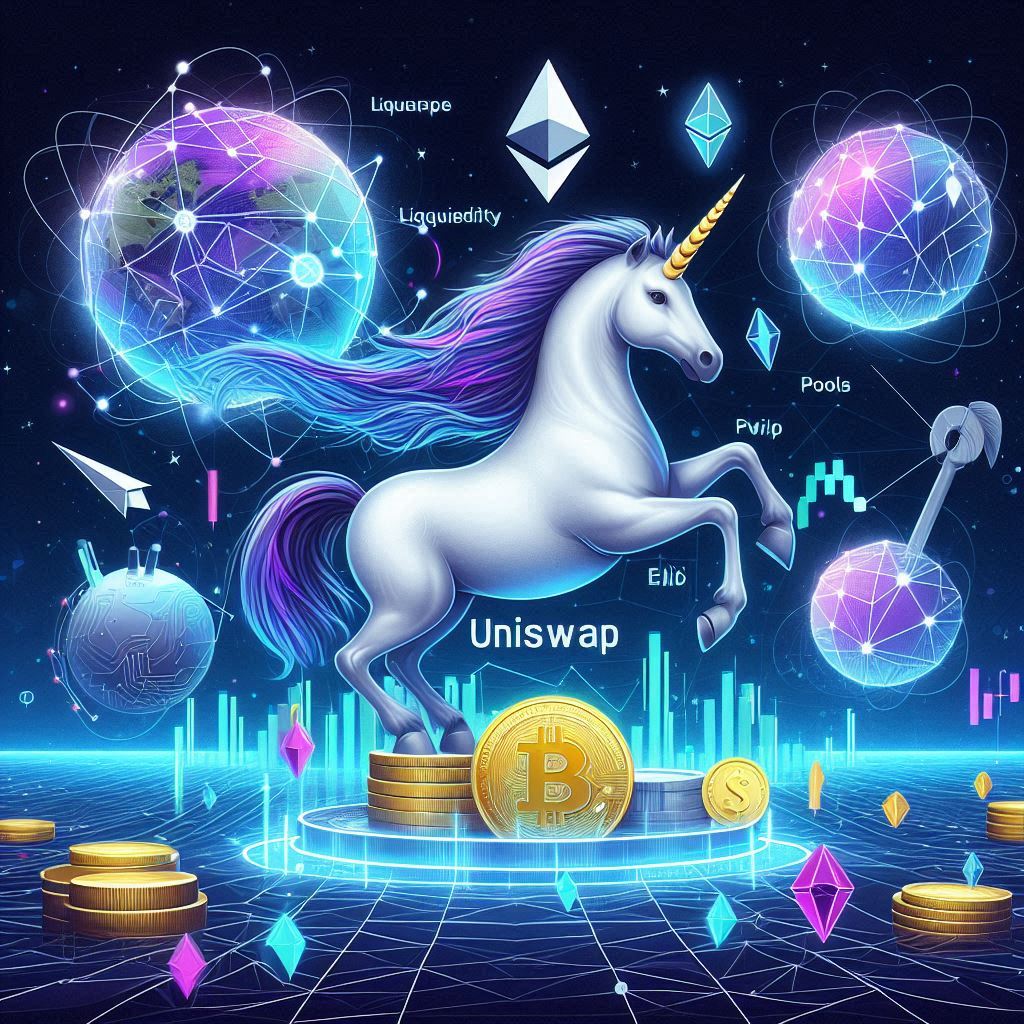
- Automated Market Maker (AMM) Model
-
1. Ledger Nano X (Best Cold Wallet)
- Type: Hardware (cold storage)
- Security: Certified secure chip (CC EAL5+)
- Supports: 1,800+ cryptocurrencies
- Connectivity: Bluetooth & USB-C
- Why choose it? Keeps assets offline, minimizing hacking risks.
2. Trezor Model T (Best Open-Source Wallet)
- Type: Hardware (cold storage)
- Security: Multi-factor authentication & PIN protection
- Supports: 1,000+ cryptocurrencies
- Why choose it? Open-source security allows constant audits.
3. Exodus (Best Hot Wallet for Beginners)
- Type: Software (hot wallet)
- Security: Private keys stored locally
- Supports: 200+ cryptocurrencies
- Why choose it? User-friendly interface with Trezor integration.
4. Trust Wallet (Best Mobile Hot Wallet)
- Type: Software (hot wallet)
- Security: Private keys stored locally
- Supports: Thousands of tokens & blockchains
- Why choose it? Mobile-friendly with DeFi & staking integration.
5. MetaMask (Best for DeFi & Web3)
- Type: Browser extension & mobile app (hot wallet)
- Security: Private keys stored locally
- Supports: Ethereum & compatible networks
- Why choose it? Ideal for interacting with DeFi, NFTs, and Web3 apps.
 PUNKO - PNK